

The Democratic National Security Community Is Beginning to Debate the US-Israel Relationship
A Serious and Thoughtful Debate has Begun Amongst People Who May Serve in National Security Positions in Future Administrations
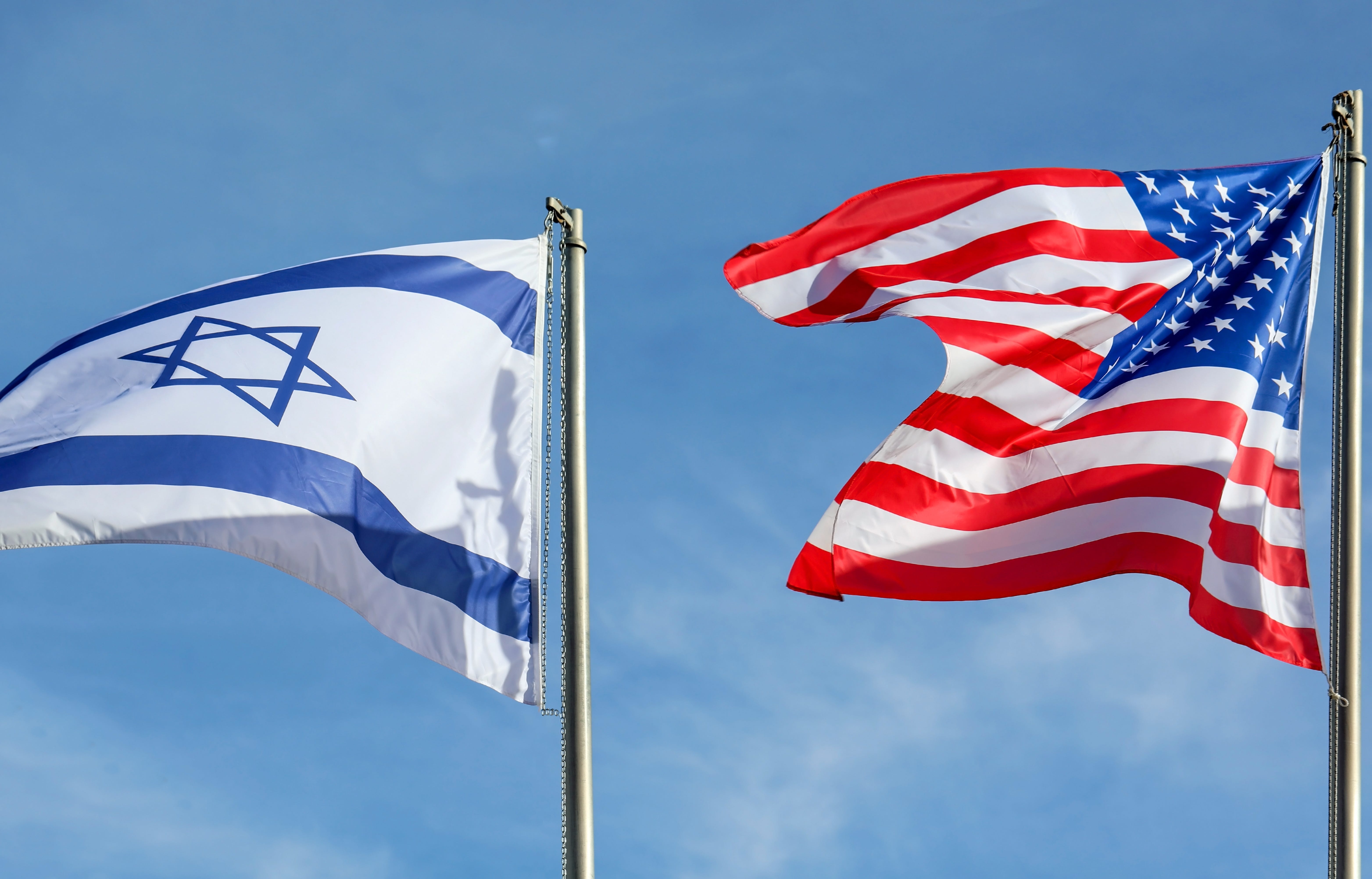
In the aftermath of the war in Gaza, real debates are being waged across the Democratic Party about the future of the US–Israel relationship. These debates are happening in activist circles and on Capitol Hill, and now we are beginning to see serious discussions among experts in the national security community – people likely to staff the State Department, Pentagon, and White House in future Democratic administrations.
Since the end of the Biden Administration, most former officials have been far more comfortable talking about Russia and Ukraine, China, artificial intelligence, and Venezuela than grappling seriously with Israel–Palestine, the administration’s legacy on the issue, and how Democrats should approach Israel in future administrations. That reluctance is understandable. Views on the US response to October 7 and the war in Gaza are sharply divided, and it is far easier to coalesce around issues where there is broad consensus – and opposition to Donald Trump – than to engage a subject this sensitive and contentious.
But that silence is breaking. In recent weeks, three thoughtful pieces have been published by people I deeply respect – former government colleagues and still friends – each offering a different vision for how the United States should approach Israel going forward.
In The Atlantic, former US Ambassador to Israel Dan Shapiro argues that the US and Israel still share many common interests and that the core of the US–Israel relationship should be preserved. When disagreements arise, Shapiro argues, the best approach is to use US support and the strength of the broader relationship to influence Israeli government behavior and reach mutual understandings.
Ben Rhodes, a former Deputy National Security Advisor to President Obama, argues in The New York Times that the “hug Bibi” approach to Israeli Prime Minister Benjamin Netanyahu has failed and that the United States must dramatically shift course.
And finally, in Foreign Affairs, Andrew Miller, a former Deputy Assistant Secretary of State for Israeli-Palestinian Affairs, argues that it is time to end Israel’s exceptional status and treat it like a normal partner.
Together, these three pieces lay the groundwork for what we can expect the Israel debate inside the foreign policy community to look like as we head into 2026 – and, more importantly, 2028. And so, even though Jeremy and I have already had both Dan and Ben on our show, I felt it was important to further break down their arguments, assess the strengths and flaws as I see them, and explain where I come down.
The Old Strategy: Incremental Influence at Too High a Cost
Dan Shapiro’s core argument is that the United States and Israel share enduring common interests and values and that, while Israel’s conduct in Gaza was deeply flawed, maintaining close cooperation gives Washington its greatest leverage. We shouldn’t give Israel a blank check, he argues, but instead we should continue working closely with Israeli leaders to shape their behavior.
There is truth in this. I’ve seen it firsthand through years in government service. This approach is especially effective when the US and Israel are aligned on core objectives such as joint technology investments, economic cooperation, intelligence sharing, and ballistic missile defense. Even in more difficult cases – such as Iran policy – where the US and Israel share the objective of preventing Iran from acquiring nuclear weapons and countering its proxies, but sometimes differ on tactics (diplomacy versus military action) or risk tolerance (how much domestic enrichment, if any, is acceptable), there is real value in working together to align assessments and use cooperation as influence.
But what if the US and Israel are fundamentally unaligned on basic objectives, as is the case with the Israeli-Palestinian conflict? Most Democrats and most Americans still believe the best outcome is one in which Israelis and Palestinians share the land and both peoples enjoy freedom and security. That is simply not how Netanyahu, Smotrich, and Ben-Gvir see it. They seek Israeli dominance over Palestinians. You cannot resolve that on the margins.
Take, for example, the Rafah operation in the spring of 2024. Shapiro points to the US role as an example of success. We worked with and applied pressure on Israeli officials to reshape the operation, resulting in a more limited campaign, fewer civilian casualties than initially anticipated, and increased humanitarian access. I don’t dispute that assessment. I was working at the White House at the time, and our approach did make things better.
But here’s the problem: Most American officials knew then what is now obvious. Going into Rafah was never going to end the war or “defeat Hamas,” as Netanyahu claimed. It was not essential, as it was portrayed to be, and it predictably caused a massive humanitarian disaster – displacing roughly 1.3 million people to the coast, where many remain today. It also imposed a tremendous international cost on the United States, which was seen as complicit in the operation, particularly since American weaponry was used.
So what did US influence and consultation buy us? Marginal improvements to a fundamentally flawed operation that we knew would neither defeat Hamas nor advance any viable post-war strategy – because Israel refused to pursue the one thing that actually could defeat Hamas over time: Building an alternative Palestinian governance structure in Gaza, which inevitably meant working with the Palestinian Authority.
And this came after extraordinary American support. The United States provided roughly $14 billion in additional assistance after October 7, surged aircraft carriers to the region, deterred Israel’s adversaries, and stood by Israel diplomatically at every turn.
Is that really the best use of American leverage? Or should we have drawn a harder line and further distanced ourselves – making clear that US support would be meaningfully at risk if Israel pursued an operation that was strategically unnecessary, morally indefensible, and directly harmful to US interests?
My bottom-line conclusion about Shapiro’s argument is this: Close cooperation can influence Israeli actions at the margins, but it only works when our interests and values are aligned. When we are fundamentally at odds – as we often are on the Palestinian issue – we cannot induce meaningful Israeli course correction. In those cases, whatever marginal benefits come from consultation are outweighed by the damage to US credibility and by the fact that we end up abetting policies toward Palestinians that we oppose and that run counter to US interests and values. Accepting those costs in exchange for limited influence isn’t worth it.
End the Hug – but Don’t Throw the Baby Out With the Bathwater
Ben Rhodes gets something essential right. What he calls the “hug Bibi” strategy – trying to convince Netanyahu to change course through reassurance and cooperation – has failed and is discredited. It effectively hands carte blanche to an Israeli government whose policies often diverge sharply from US interests and values. I agree with that diagnosis. But I think he goes too far in two places.
My first disagreement is a quibble. Rhodes argues that “hug Bibi” has been the dominant strategy for most of the past 15 years under Obama and Biden. I see it more as a strategy that the Democratic Party has been evolving away from, with an increasing number of politicians and experts questioning the approach. In 2015, for example, Obama successfully secured passage of the Iran deal with overwhelming Democratic support despite strong objections from Netanyahu. After Netanyahu returned to power at the end of 2022 and began attacking Israel’s judiciary, Biden refused to host him at the White House for nearly a year and raised serious concerns about Israel’s trajectory.
After the October 7 attacks, Biden initially returned to his instinct of hugging Bibi, which I believe was correct in the immediate aftermath. But he kept hugging Bibi for too long and ultimately gave him too much space to perpetuate an unjust war that included horrific human rights violations.
My larger disagreement concerns one of Rhodes’s policy prescriptions. He argues that the United States should:
“ … Refuse to provide military assistance to a government that has committed war crimes; support the International Criminal Court in its work, whether it is focused on Vladimir Putin or Benjamin Netanyahu; oppose any effort by Israel to annex the West Bank or ethnically cleanse the Gaza Strip; invest in an alternative Palestinian leadership to Hamas that can ultimately govern a Palestinian state; [and] stand up for democracy in Israel as in the United States.”
I agree with most of this. Where Rhodes goes too far is in arguing for a complete cutoff of military assistance as long as Netanyahu remains in power. His position is that the US should provide no arms at all to the current Israeli government – including purely defensive systems like missile defense and Iron Dome – because of war crimes committed in Gaza.
That, in my view, cuts against US interests.
There are hundreds of thousands of American citizens living in Israel – roughly 5-10 percent of the population. October 7 was one of the deadliest days for American citizens since 9/11. Is the United States really prepared to withhold defensive systems that protect so many of its own citizens?
More broadly, it is critical to distinguish between Israel’s conduct toward Palestinians and its actions against Iran and its proxies. After October 7, Hezbollah, the Houthis, and Iraqi Shia militias all joined the fight against Israel. In these arenas, the US and Israel worked closely together in ways that ultimately led to major setbacks for Iran and its proxies – an outcome clearly in the US interest. This is, in fact, the strongest version of Shapiro’s argument for cooperation.
In Lebanon, American advice and partnership convinced Israel not to retaliate immediately with a major regional war against Hezbollah in the days after October 7. When fighting eventually escalated in the summer and fall of 2024, US cooperation helped Israel conduct a limited war that dramatically weakened Hezbollah while avoiding a massive land invasion all the way to Beirut.
Similarly, after Iran overreacted to the killing of an Islamic Revolutionary Guard Corps (IRGC) general in Syria in the spring of 2024 and again to the killing of Ismail Haniyeh in Tehran in the summer – launching hundreds of missiles at Israel – the United States worked with regional and European allies to coordinate Israel’s defense and restrain Israeli retaliation, helping to avoid a broader regional war. Even after Trump ultimately greenlit a short war against Iran – a major strategic mistake, in my view, that will fuel recurring conflict without eliminating Iran’s nuclear program – the US was able to dictate a rapid end through a ceasefire mediated with Qatar.
Just as Shapiro underestimates how often cooperation fails when US and Israeli interests diverge sharply, Rhodes goes too far in the other direction, proposing steps that would cut off elements of the US-Israel partnership that genuinely serve American interests in the Middle East.
Treating Israel as a Normal Friend
That brings me to Andrew Miller’s argument, which I believe best threads the needle. Miller argues that it is time to stop treating Israel as an exceptional case and instead treat it like a normal country – a close partner, yes, but one subject to the same rules as every other US ally.
When US and Israeli interests align, we should work closely together: intelligence sharing, joint technology development, economic ties, and military cooperation against shared regional threats.
But when our interests and values diverge – as they clearly do on the Palestinian issue – we should stop pretending otherwise. That means no special exemptions from US law. No unique Leahy Law carve-outs. No automatic diplomatic shielding at the UN or ICC when Israel violates international norms in Gaza or the West Bank. And real consequences when Israeli leaders interfere in American domestic politics.
It also means recognizing that Israel is now a wealthy country, with a per-capita GDP comparable to Japan, France, or the United Kingdom. There is no compelling reason it should continue receiving billions of dollars in unconditional US military aid. That does not mean an abrupt cutoff that destabilizes Israel’s security – but it does mean gradually phasing out military aid and transitioning to a normal arms-sales relationship, with the same conditions and accountability applied to every other partner.
To be clear, for those of us who deeply care about a U.S.-Israel relationship based on common values and interests, treating Israel “normally” does not mean walking away. At times, we have had real disagreements with some of our closest NATO allies. When we do, we agree to disagree and go our separate ways on an issue while continuing to sustain the overall relationship. The closeness of these relationships also wax and wane based on who is in power both in the U.S. and in Europe (Hopefully, the current administration doesn’t permanently torch these relationships). The same can and should apply to how we approach Israel.
Beyond being substantively correct, this approach has a major political advantage: it is easy to explain. “Israel is a friend and ally, and we should treat it like our other friends and allies – working together where we agree and withholding support where we don’t.” That is a common-sense argument voters understand. It works in a Democratic primary. It works with independents. It even works with many MAGA voters.
Normalizing the US-Israel relationship in clear, conventional foreign policy terms has another advantage. Antisemites on both the far left and far right routinely exploit the relationship, particularly when it is framed as exceptional, to advance conspiracy theories about hidden Jewish influence. Rightsizing the US’s diplomatic relationship with Israel reduces the space for those distortions to take hold.
The bottom line is that the era of pretending that the US–Israel relationship can be managed through personal trust, quiet persuasion, and unlimited support is over. That approach has delivered diminishing returns at growing cost to US interests, credibility, and values. At the same time, there is real value in the relationship, and so going too far in the other direction would also be harmful to both American and Israeli interests. A strategy grounded in normal alliance politics – cooperation where interests align and consequences where they don’t – is the best way to protect US interests. It is also the best way to sustain the US-Israel relationship, which is the best option for Israel’s long-term interests.