

War
The United States seems to be sleepwalking toward war with Iran. Congress must act before unchecked momentum becomes catastrophe.
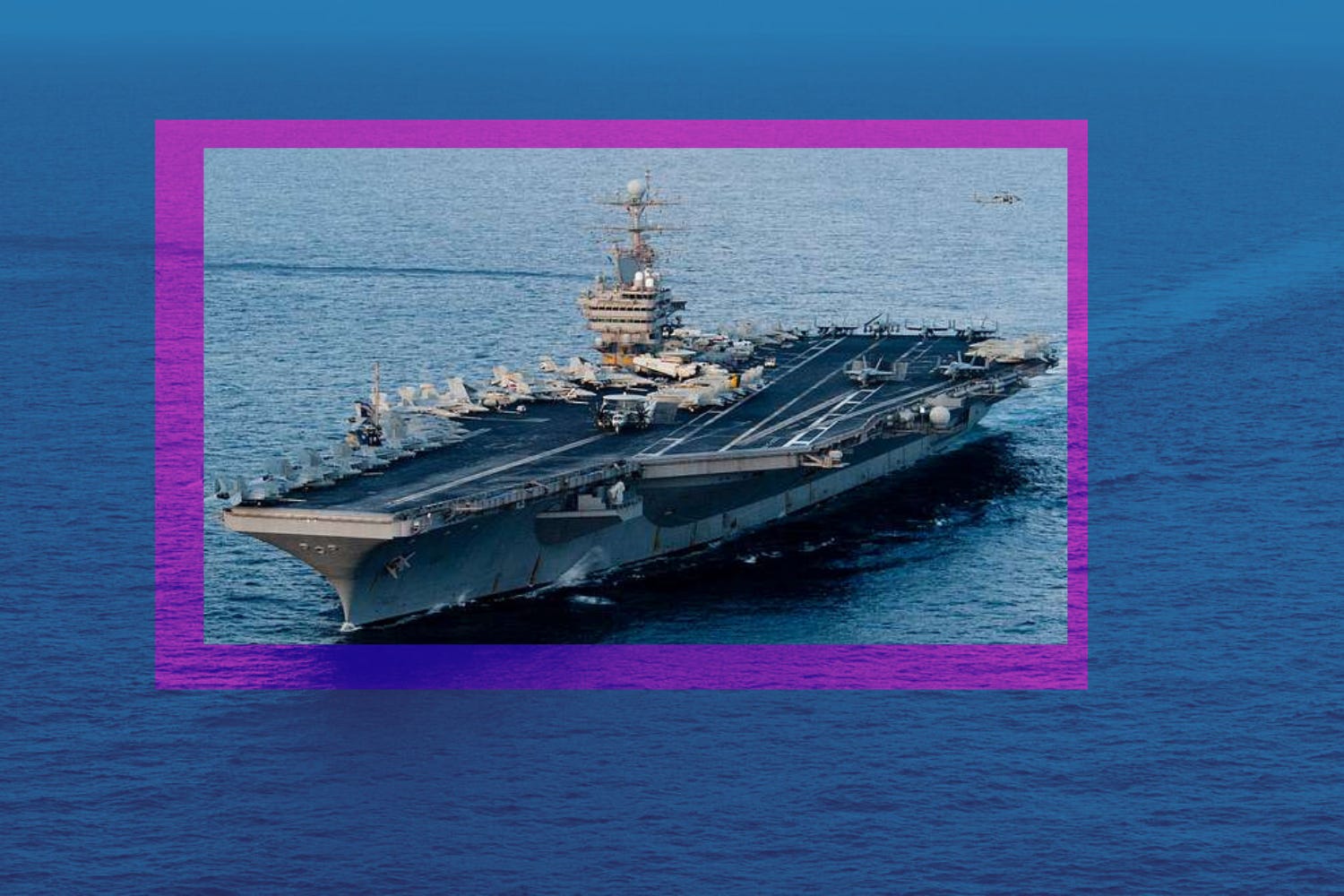
It has been a quarter century since the United States embarked on two long and costly wars in the Middle East. More than six decades have passed since we slid, step by step, into the disaster of Vietnam.
We should know better by now the cost of American overreach.
I come from a family that understands war – not abstractly, but personally. My maternal grandfather fought in World War I. My father fought in World War II. Both my wife’s family and mine were deeply involved in Israel’s war of independence and the many wars that have followed.
There is no lack of fight in my family. No hesitation to sacrifice when the cause is just. But precisely because one understands war, one understands its cost.
And in my lifetime as an American citizen, the decision to go to war has too often been taken far too lightly.
There won’t be a Sunday column from Word on the Street next week.
I’ll be at J Street’s National Convention, Building Tomorrow: Regional Peace & Resilient Democracy.
Join us: In Washington DC from February 28 to March 3.
If you can’t make it, look out for interviews and other content from the Convention right here on Word on the Street.
In 2002, as the United States moved toward invading Iraq, enormous pressure bore down on lawmakers. Democrats in particular felt they had to prove themselves “tough” on national security. Too many who harbored presidential ambitions feared a vote against the war would mark them as “weak.”
The result was a vote that authorized a war many of us warned would be a disaster.
It was.
The Iraq war cost hundreds of thousands of lives, destabilized an entire region, drained trillions of dollars, and damaged America’s credibility for a generation.
Vietnam offers an even older warning: wars often begin with confidence and narrow objectives – and then widen, deepen, and entangle us far beyond what anyone initially envisioned.
Which brings us to Iran.
No serious person defends the Iranian regime. It represses its own people brutally. It supports armed proxies that destabilize the region. Its ballistic missile program and nuclear ambitions are deeply concerning. Its leadership routinely violates international norms.
We are right to maintain strong economic sanctions aimed at constraining the regime’s capabilities. International pressure enables diplomacy. That strategy produced the 2015 nuclear agreement – the Joint Comprehensive Plan of Action – which placed real limits on Iran’s nuclear program and subjected it to intrusive inspections.
There are many dimensions to Iran’s malign behavior. But none of them, at this moment, justify launching an American military attack.
As we wake up this week to headline after headline about the growing accumulation of American forces in the region, we must remember the classic Clausewitz dictum:
“No one starts a war – or rather, no one in his senses ought to do so – without first being clear in his mind what he intends to achieve by that war and how he intends to conduct it.”
We have heard no clear definition from the Trump administration of success or of the goals. No plan for achieving them. No estimate of the Iranian response and the chain reaction that could spark.
It’s very possible that an initial strike will yield images of success - remember “Shock and Awe” and “Mission Accomplished”?
Weren’t we told eight months ago that the Iranian nuclear program was “obliterated”? If so, why are we right back here again?
Perhaps most importantly: what is the plan for the day after? If the objective, spoken or unspoken, is regime change, what replaces it?
There has been no visible effort to build meaningful international consensus or legitimacy. No sustained national debate worthy of the stakes involved.
And yet there is a troubling sense of momentum – even enthusiasm – among hawkish voices in Washington and in Israel who have long viewed military confrontation with Iran as inevitable, even desirable.
We have seen this movie before: confidence at the outset, assurances that the operation will be swift and decisive, faith that events will break our way.
History suggests otherwise.
There is no decision more consequential than the decision to go to war. Entire nations can be destabilized. Regional conflicts can widen. Tens of thousands – or more – of lives can be altered or lost. Once begun, war rarely unfolds according to plan.
Our founders understood this. They vested in Congress – not the president – the authority to declare war precisely because they believed the grave decisions required collective judgment and public accountability. The War Powers Act was designed to prevent exactly this kind of drift toward armed conflict without democratic authorization.
We know the price of war.
This past week, I walked through the ruins of Kfar Aza, the kibbutz on the Gaza border devastated on October 7. I looked at the photographs of young people whose lives were cut short – their smiling faces frozen in time.
A short distance away lay the devastation of Gaza – entire neighborhoods flattened, families shattered, a staggering percentage of the population killed or injured.
We ended the week at Yad Vashem, honoring the more than six million Jews murdered in the Holocaust. The museum has only recently reached the milestone of identifying five million of their names – each one a life, a story, a world extinguished.
War is not abstract. It is not a cable news segment or a political posture. It is graves and hospital wards. It is children who grow up without parents. It is trauma that echoes for generations.
Yes, there are times when war is necessary. My family’s history testifies to that. We have fought when there was no alternative.
But precisely because of that history, I cannot accept that launching another Middle Eastern war – without a clear objective, without a plan for what follows, without domestic authorization or international legitimacy – is something we should sleepwalk into.
This week, members of Congress have the opportunity to assert their constitutional role and insist that any military action against Iran receive the authorization the Constitution requires.
They should do so.
Not as a partisan maneuver. Not as a symbolic protest. But as a matter of moral seriousness and constitutional duty.
If this nation is to go to war, it must do so deliberately, lawfully, and with clarity about the consequences.
Absent that, Congress must act – and stop it.
If you appreciate the work J Street does, I hope you’ll consider making a grassroots contribution to ensure our voice is heard.
Agree. I wish Trump expressed as much sympathy for American protesters as he does for Iranian protesters. Some D.C. denizens - most notably John Bolton - have been agitating for war with Iran for years. Unfortunately, Trump is the president who is gullible enough to be manipulated into going along. Just tell him he will personally benefit in some way and he will be all in.
Removing a government doesn't create a better government, it creates chaos and anarchy. Venezuela is not a relevant example, because the Trump administration only kidnapped the president, but left the government structure intact.
I appreciate your clarity on this subject Jeremy. Thank you