

There Is No Progressive Case for October 7
Every political movement eventually has to decide whether it actually believes the values it proclaims. For parts of the progressive movement, that moment is here.
Congressman Ro Khanna traveled to the occupied West Bank to shine a light on the realities of occupation, dispossession and violence confronting Palestinians.
Khanna is a fierce advocate for Palestinian rights, and his trip focused on issues that desperately deserve greater attention.
Yet for some on the left, that was not enough.
In one notable media appearance, the independent journalist Jeremy Scahill challenged Khanna repeatedly on Drop Site News to say that if Palestinians have a right to resist occupation, that right must include the kind of armed attack Hamas carried out on October 7.
I have to admit I was struck by how quickly the conversation turned from support for Khanna’s trip to the West Bank to a debate over whether October 7 should be understood as legitimate armed resistance.
Why, Scahill asked, could Israel claim a right of military self-defense while Palestinians could not?
It’s an important question. But it doesn’t lead to the conclusion that Scahill wants it to lead.
And it’s a moral line Khanna refused to cross.
He was right not to cross it.
Because there is no progressive case for October 7.
There is no human rights case for October 7.
And there is certainly no moral case for what Hamas did that day.
Hamas's target was not the Israeli military. Its operation was designed to murder, terrorize and kidnap civilians. The Israeli military simply stood between Hamas and the people it intended to attack.
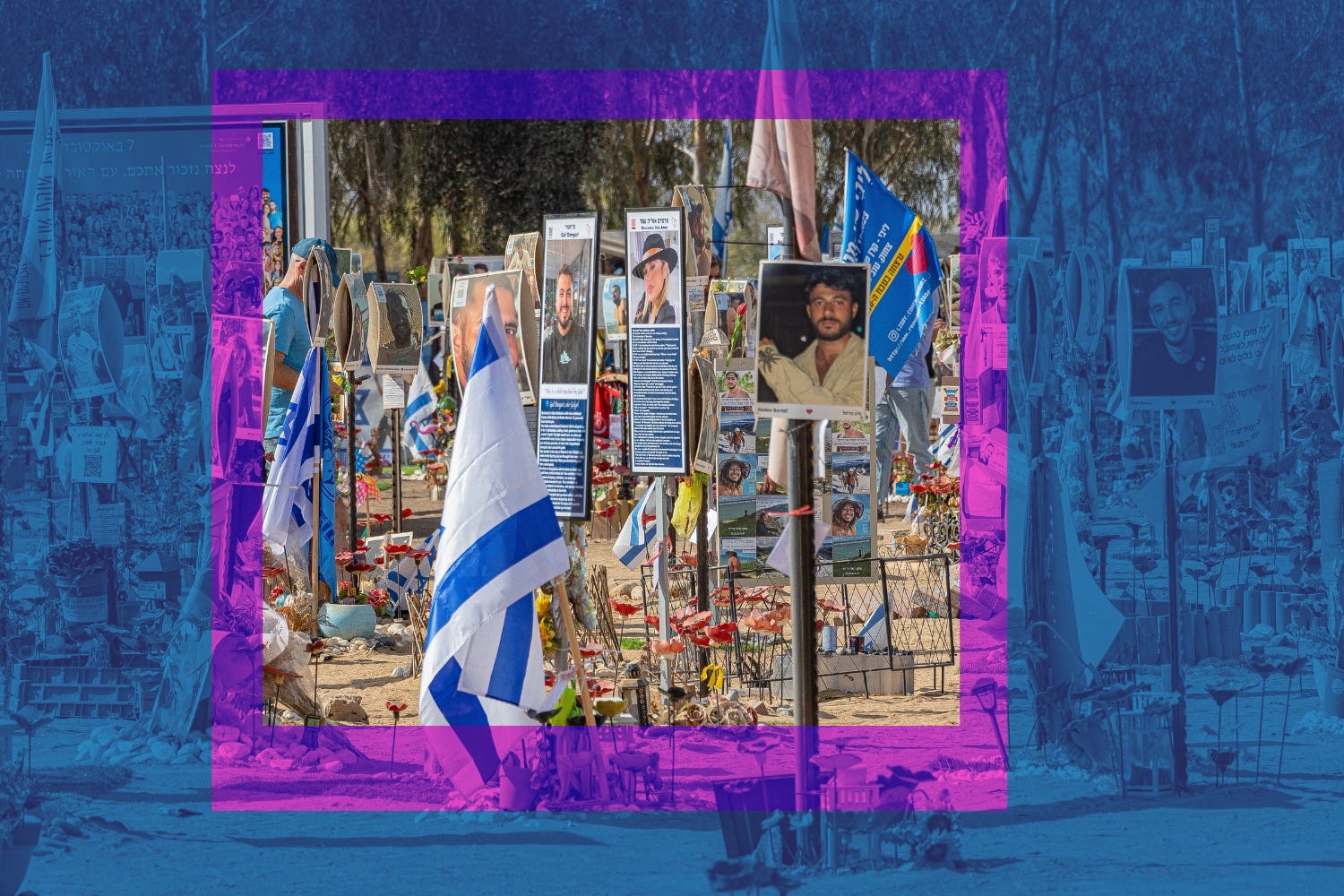
Young people dancing at the Nova music festival were hunted down. Families were burned alive in their homes. Children and elderly civilians were kidnapped. Women were subjected to horrific sexual violence. More than 250 people were taken hostage.
Among those killed were Israelis who had devoted their lives to peace and coexistence. Some were friends of mine. Others were partners of J Street. They were people who believed that Israelis and Palestinians deserved equal dignity and equal rights.
I understand why decades of occupation and the devastation of Gaza have led some people to rationalize October 7. But understanding how someone reaches a conclusion is not the same as accepting it.
And to me, to describe the evil Hamas perpetrated that day as legitimate “resistance” is not merely offensive. It strips that word of all moral meaning.
The laws of war recognize that people may fight over profoundly just causes. Their purpose is to regulate how wars are fought - not to declare one side’s cause righteous and the other’s illegitimate. That is precisely why international law prohibits deliberately targeting civilians – not because oppressed people have no rights, but because no people, however grievously wronged, have that right.
If profound injustice becomes a license to murder civilians, then there are no laws of war. There are only competing justifications for atrocity.
And that is a world none of us should want to inhabit.
Human history is largely the story of peoples convinced their suffering entitled them to inflict suffering on others. After the catastrophes of the twentieth century, the international community attempted to build something different: an international order grounded in law, diplomacy and human rights.
That order has always been imperfect and inconsistently applied. But abandoning it is not progress. It is regression – to a Hobbesian world where might makes right and every atrocity simply justifies the next.
Ironically, that vision has more in common with the authoritarian nationalism progressives are fighting than with any genuine commitment to universal human rights.
Israel’s far right makes the same mistake from the opposite direction. Smotrich, Ben-Gvir and their allies justify collective punishment in response to terrorism.
One side says occupation justifies terrorism. The other says terrorism justifies collective punishment. Neither is true.
Both abandon the principle that innocent human beings possess rights no government, army or armed movement may violate.
None of this requires minimizing Palestinian suffering.
I have spent much of my career arguing that Israel’s occupation is morally corrosive and strategically disastrous – for Palestinians, for Israelis and for the future of Zionism itself. Nothing that has happened over the past three years has weakened that conviction.
Both the realities of occupation and the horrors of October 7 demand moral outrage.
But moral outrage loses its credibility when it becomes selective.
Universal human rights cease to be universal the moment we decide they apply only to people whose politics we share.
If we cannot condemn Hamas’ deliberate slaughter of civilians with the same moral clarity that we condemn Israel’s devastation of Gaza, then we are no longer defending universal human rights.
To anyone who claims to speak in the name of justice or human rights, I have two simple questions.
Was October 7 an act of terrorism that was morally indefensible?
Is the devastation of Gaza and the perpetuation of occupation morally indefensible?
If they answer either question with anything less than an unequivocal yes, then – in my eyes – they have abandoned the universal values they claim to defend.
America does not need leaders who ask us to choose between Israeli lives and Palestinian lives.
It needs leaders who insist that both are equal in value – leaders who choose law over vengeance, diplomacy over domination, and human dignity over tribalism.
Leaders who can say, without hesitation, that October 7 was a moral abomination – and that so too are the destruction of Gaza and the perpetuation of occupation.
That isn’t moral ambiguity. It is moral consistency.
Our principles mean nothing if they do not apply equally to everyone. Progressive leaders should have the courage to say so openly – even when doing so is unpopular with their own side.
If you appreciate the work J Street does, I hope you’ll consider making a grassroots contribution to ensure our voice is heard.
earance, the independent journalist Jeremy Scahill challenged Khanna repeatedly on Drop Site News to say that if Palestinians have a right to resist occupation, that right must include the kind of armed attack Hamas carried out on October 7.
I have to admit I was struck by how quickly the conversation turned from support for Khanna’s trip to the West Bank to a debate over whether October 7 should be understood as legitimate armed resistance.
Why, Scahill asked, could Israel claim a right of military self-defense while Palestinians could not?
It’s an important question. But it doesn’t lead to the conclusion that Scahill wants it to lead.
And it’s a moral line Khanna refused to cross.
He was right not to cross it.
Because there is no progressive case for October 7.
There is no human rights case for October 7.
And there is certainly no moral case for what Hamas did that day.
Hamas's target was not the Israeli military. Its operation was designed to murder, terrorize and kidnap civilians. The Israeli military simply stood between Hamas and the people it intended to attack.
Young people dancing at the Nova music festival were hunted down. Families were burned alive in their homes. Children and elderly civilians were kidnapped. Women were subjected to horrific sexual violence. More than 250 people were taken hostage.
Among those killed were Israelis who had devoted their lives to peace and coexistence. Some were friends of mine. Others were partners of J Street. They were people who believed that Israelis and Palestinians deserved equal dignity and equal rights.
I understand why decades of occupation and the devastation of Gaza have led some people to rationalize October 7. But understanding how someone reaches a conclusion is not the same as accepting it.
And to me, to describe the evil Hamas perpetrated that day as legitimate “resistance” is not merely offensive. It strips that word of all moral meaning.
The laws of war recognize that people may fight over profoundly just causes. Their purpose is to regulate how wars are fought - not to declare one side’s cause righteous and the other’s illegitimate. That is precisely why international law prohibits deliberately targeting civilians – not because oppressed people have no rights, but because no people, however grievously wronged, have that right.
If profound injustice becomes a license to murder civilians, then there are no laws of war. There are only competing justifications for atrocity.
And that is a world none of us should want to inhabit.
Human history is largely the story of peoples convinced their suffering entitled them to inflict suffering on others. After the catastrophes of the twentieth century, the international community attempted to build something different: an international order grounded in law, diplomacy and human rights.
That order has always been imperfect and inconsistently applied. But abandoning it is not progress. It is regression – to a Hobbesian world where might makes right and every atrocity simply justifies the next.
Ironically, that vision has more in common with the authoritarian nationalism progressives are fighting than with any genuine commitment to universal human rights.
Israel’s far right makes the same mistake from the opposite direction. Smotrich, Ben-Gvir and their allies justify collective punishment in response to terrorism.
One side says occupation justifies terrorism. The other says terrorism justifies collective punishment. Neither is true.
Both abandon the principle that innocent human beings possess rights no government, army or armed movement may violate.
None of this requires minimizing Palestinian suffering.
I have spent much of my career arguing that Israel’s occupation is morally corrosive and strategically disastrous – for Palestinians, for Israelis and for the future of Zionism itself. Nothing that has happened over the past three years has weakened that conviction.
Both the realities of occupation and the horrors of October 7 demand moral outrage.
But moral outrage loses its credibility when it becomes selective.
Universal human rights cease to be universal the moment we decide they apply only to people whose politics we share.
If we cannot condemn Hamas’ deliberate slaughter of civilians with the same moral clarity that we condemn Israel’s devastation of Gaza, then we are no longer defending universal human rights.
To anyone who claims to speak in the name of justice or human rights, I have two simple questions.
Was October 7 an act of terrorism that was morally indefensible?
Is the devastation of Gaza and the perpetuation of occupation morally indefensible?
If they answer either question with anything less than an unequivocal yes, then – in my eyes – they have abandoned the universal values they claim to defend.
America does not need leaders who ask us to choose between Israeli lives and Palestinian lives.
It needs leaders who insist that both are equal in value – leaders who choose law over vengeance, diplomacy over domination, and human dignity over tribalism.
Leaders who can say, without hesitation, that October 7 was a moral abomination – and that so too are the destruction of Gaza and the perpetuation of occupation.
That isn’t moral ambiguity. It is moral consistency.
Our principles mean nothing if they do not apply equally to everyone. Progressive leaders should have the courage to say so openly – even when doing so is unpopular with their own side.
If you appreciate the work J Street does, I hope you’ll consider making a grassroots contribution to ensure our voice is heard.
Absolutely correct. And glad that Ro Khanna stood up talk against the bigotry and hatred at the heart of Jeremy Cahill's criticism. Khanna was doing more to support the Palestinian cause in that interview than Achilles ever would. And doing so without throwing Israelis and Jews under the Bus.
Yeah, I posted something about my relatives perishing in the holocaust and got a response that I was a “fucking lampshade.”I can take this in stride but the real question is if we can all get along to defeat Trump.