

In just a few days, we will enter Yom Kippur, the most sacred day of the Jewish calendar. Yom Kippur is a day of prayer, reflection, and teshuvah. At the start of a new Jewish year, I am honored to share this message to the amazing students who make up J Street U.
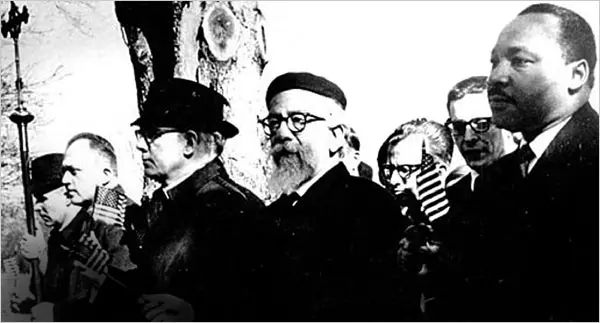
I recently read the essay “On Prayer,” by Rabbi Abraham Joshua Heschel. In an essay full of profound thoughts, one stands out to me; “We have lost the ability to be shocked… We do not know what to pray for. Should we not pray for the ability to be shocked at atrocities committed by man, for the capacity to be dismayed at our inability to be dismayed?”
Heschel was writing within the context of the Vietnam War, and in the aftermath of the Holocaust and World War II.
Now, we’re living in a different time and a different world where tragedy from across the world is beamed into our phones. I worry, like Heschel, about our inability to be shocked. Images of destruction, in Gaza, the West Bank, and beyond, have become so constant that I’m concerned we are becoming numb.
But it’s essential that we fight this mentality, and that we don’t give in to that numbness or a feeling of powerlessness. Instead, we need to address these horrors head-on.
We need to address the continuing violence in Gaza, where Israel retains control of at least two-thirds of the territory.
We need to address the spiraling settler terrorism in the West Bank – the inaction and even complicity of the IDF as settlers wreak havoc on Palestinian communities.
And we need to address the lack of willingness in our own Jewish community to grapple with our role. As Jewish Americans, we must hold ourselves, our government, and Israel accountable. We need to ground our work in the Jewish values that are so important to us: b’tzelem elohim, the idea that everyone is made in the image of God, and Devarim’s commandment: “tzedek tzedek tirdof,” the instruction to pursue justice.
As we enter Yom Kippur, I know that I will be spending this holiday reflecting on my own role within the bigger picture. The act of teshuvah is an instruction for us to return to our values, to atone for where we fell short, and to believe that if we take this work seriously, we can make a true impact. This Yom Kippur, I will ask myself what more I can do to fight for justice, freedom, and liberation for all people.
Later in his essay, Heschel writes, “Prayer is meaningless unless it is subversive, unless it seeks to overthrow and to ruin the pyramids of callousness, hatred, opportunism, falsehoods.”
My hope for us all is that we have a Yom Kippur full of prayer that is subversive. That we are able to break through the cycles of inaction and complacency we may find ourselves stuck in. That we not only think about our relationships to each other, but our relationship to the world. That our prayer, not just on Yom Kippur but far beyond, helps us topple the systems that keep people in chains.
G’mar chatima tova,
Jacob Glass
J Street U National President

Love!
Thank you. I've got to find that essay! A rich resource.